Indianapolis Motor Speedway
Speedway, Indiana, United States
Track
Modern IndyCar / IMSA road course
Provisional outline · © OpenStreetMap contributors · ODbL 1.0
- Lap length
- 2.439 mi3.925 km
- Turns
- 14
- Lap flow
- Clockwise
- Opened
- 1909
An infield road course linked to the oval
Corners
Corner highlights
Turns 1–2
Colton Herta describes a trade-off here: carrying more speed through Turn 1 can leave the car poorly placed for Turn 2.
The Esses
Turns 7–10 are one continuous problem. Herta leaves some speed on the table early to get a better line through the remainder.
Videos
 Watch on YouTube
Alex Palou explains the Indy road course
Simulator guide · INDYCAR · Indianapolis road course
What to watch for
INDYCAR · Watch how Palou sets up the first infield turn from the wide main straight. Follow the lap to see where the road course rejoins the oval.
 Watch on YouTube
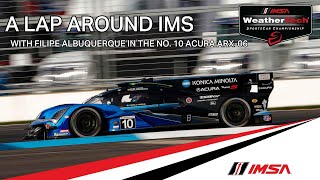
Filipe Albuquerque’s Acura road-course lap
GTP circuit guide · 2023 IMSA · Indianapolis road course
What to watch for
IMSA Official · Follow the Acura at the end of the main straight. The sharp right takes it off the speedway surface and into the infield.
 Watch on YouTube
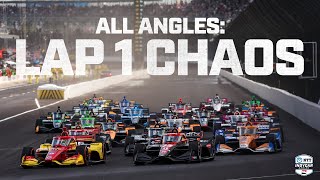
The Indianapolis start from 13 cars
Race onboard comparison · 2024 Sonsio Grand Prix · opening lap
What to watch for
NTT INDYCAR SERIES · Watch the same opening stack-up from the front and then from deeper in the field. Each driver sees the narrowing space at Turn 1 a little later.
Visit
Reserve museum admission for your chosen time. During public track events you also need an event ticket to reach the museum. Track tours are optional and depend on the day’s programme.
Viewing and admission
Explore the exhibits with museum admission. A public race at the speedway requires its own event ticket as well. Check the tour calendar if you want to visit the podium or see the oval with a guide.
Getting there and entry
Enter Gate 2 on West 16th Street and continue straight to the museum lot. Parking there is free on ordinary museum days. For gate-admission events, the museum lot requires a parking pass. Check the event’s parking instructions before setting out.
Accommodation and camping
One nearby option is Courtyard Indianapolis West-Speedway on Crawfordsville Road. The hotel lists the speedway and museum 2.3 miles away. For an ordinary visit by car, use the museum’s Gate 2 entrance on West 16th Street.
Accessible visits
The museum has accessible parking, entrance ramps and wheelchair-accessible tour buses. Wheelchairs are available in limited numbers. The Welcome Center lends sensory bags, and the wellness room is available first come, first served.
Food and facilities
Plan your meal before or after the museum visit. There is no on-site restaurant, and bottled water is the exception to the carry-in drinks rule. Leave coolers and backpacks outside the galleries. The Welcome Center has a limited number of lockers.
Conditions and changing rules
The museum is cashless and closes on Thanksgiving and Christmas Day. Check the visitor page for winter hours and exceptions on your date. Track activity and severe weather can change the tour schedule.
Outside race weekends
Choose a museum admission time first to see which track tours you can add. The guided Kiss the Bricks bus tour includes a lap of the oval when offered. On days the track is unavailable, the calendar may offer the Victory Podium tour instead.
Access notes
Last reviewed 2026-11-22
Museum visits and track tours are separately booked activities, with available routes changing when the circuit is in use. The museum’s described Kiss the Bricks tour concerns the oval rather than a guarantee of a lap of the selected road course. Race admission and authorized participant access follow their own event arrangements.
Event access; private driving or track-day eligibility must be checked with the operator.
Events
2027
30 May 2027Indianapolis 500
Race day for the 111th Indianapolis 500 is Sunday; qualifying is the previous weekend.
Indianapolis Motor Speedway · Indianapolis 500 schedule25 Jul 2027Brickyard 400
The NASCAR Cup race follows Saturday’s Pennzoil 250 on the Brickyard weekend.
Indianapolis Motor Speedway · 2027 race dates17–19 Sep 2027IMSA Battle on the Bricks
IMSA’s sports-car meeting is separate from the Indy 500 and the July NASCAR weekend.
Indianapolis Motor Speedway · 2027 race datesRacing history
Signature race IMSA Battle on the Bricks
Racing heritage
The Speedway’s road-racing history includes Formula 1, MotoGP, INDYCAR, stock cars and sports cars at different times. The official 2026 INDYCAR archive and the operator’s IMSA report establish modern road-course competition. Results must retain series, date and layout identity; a shared venue name does not permit combining oval, earlier F1 and current sports-car lap records.
Original research snapshot · 17 November 2026
Race history
The Speedway began motor-racing activity in 1909, following an opening balloon event earlier that year. Its oval became the home of the Indianapolis 500 and one of the sport’s central historic venues. An infield road course added a separate international racing role, including the United States Grand Prix. The modern IndyCar and sports-car configuration is distinct from both the oval and the older Formula 1 route.
Current uses
Official 2026 IndyCar information identifies the 14-turn road course, and the operator’s September race report confirms IMSA competition there. The same report lists the Indianapolis 8 Hour in October. These road-course uses provide direct contemporary evidence of prototype and GT3-level racing, alongside the much older but geometrically separate Indianapolis 500 oval.